Back to Tutorials
CBRN PROTOCOL
Biohazard & CBRN Defense: Contamination & Protocol Guide
Operational protocol for pneumonic plague (respiratory Yersinia pestis), a fulminant infection (24–72 h) but treatable and manageable with specific barriers. These indications serve as contingency guidance in the absence of official directives from governments or health authorities.
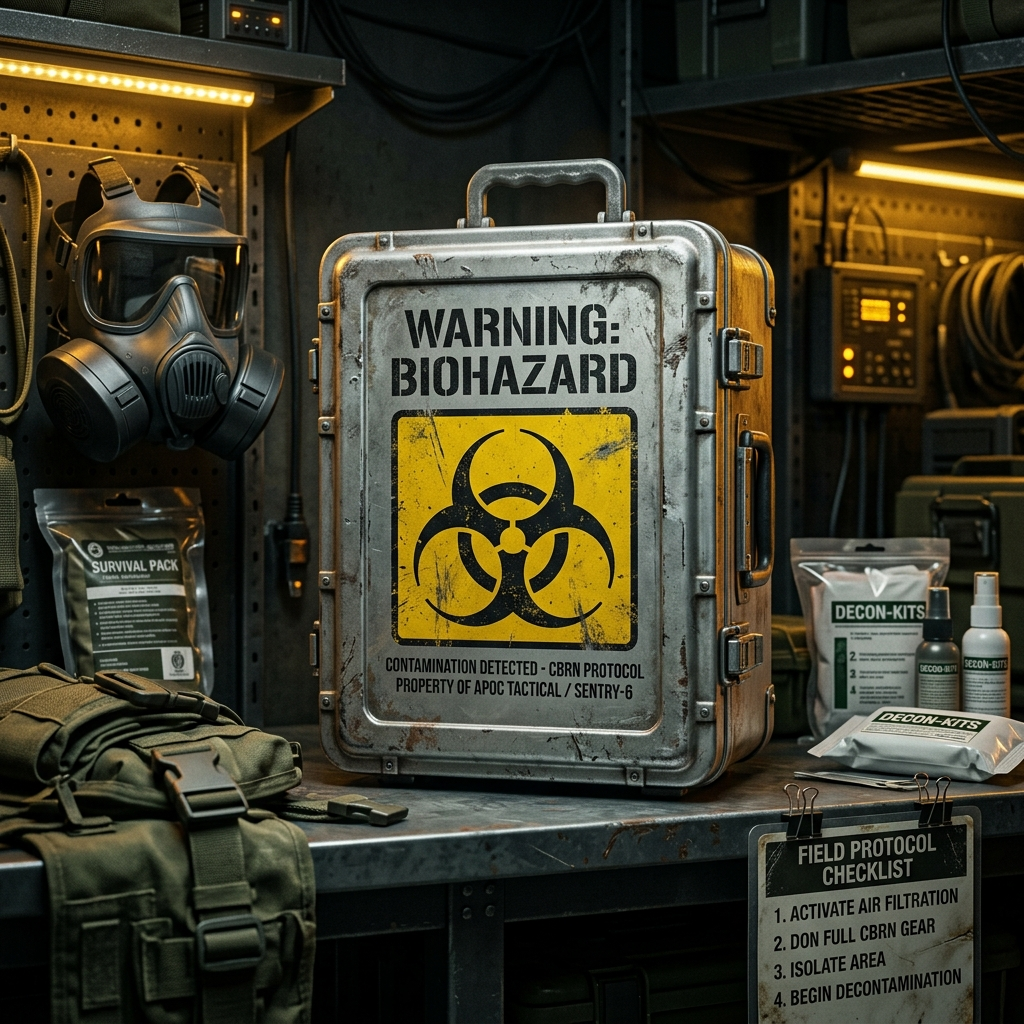
SAFETY PROTOCOL DISCLAIMER
Safety Reference Guide: Always adhere to manufacturer standards and local industrial safety codes.
Phase 1: Barrier Architecture & Personal Protective Equipment (PPE)
Transmission occurs via respiratory cough droplets, short-range aerosols, and blood-tinged fluids expelled from the respiratory tract.
Phase 2: Household Air-Lock & Sanitization Corridor Protocol
Prevent mechanical pathogen infiltration into living quarters following essential supply or emergency sorties:
Phase 3: Pharmacological Contingency and Prophylaxis
Pneumonic Yersinia pestis has a case fatality rate near 100% without rapid intervention, but a high cure rate if treated within the first 18 to 24 hours of exposure or onset of symptoms.
Phase 4: Intra-Household Isolation & Quarantine Protocol
If a household member develops sudden high fever, chills, rapid dry cough, or blood-tinged/frothy sputum:
Phase 5: Strict Confinement Logistics & Sustenance Management
The primary objective during a high-lethality biological peak is zero external social contacts for 30 to 60 days.